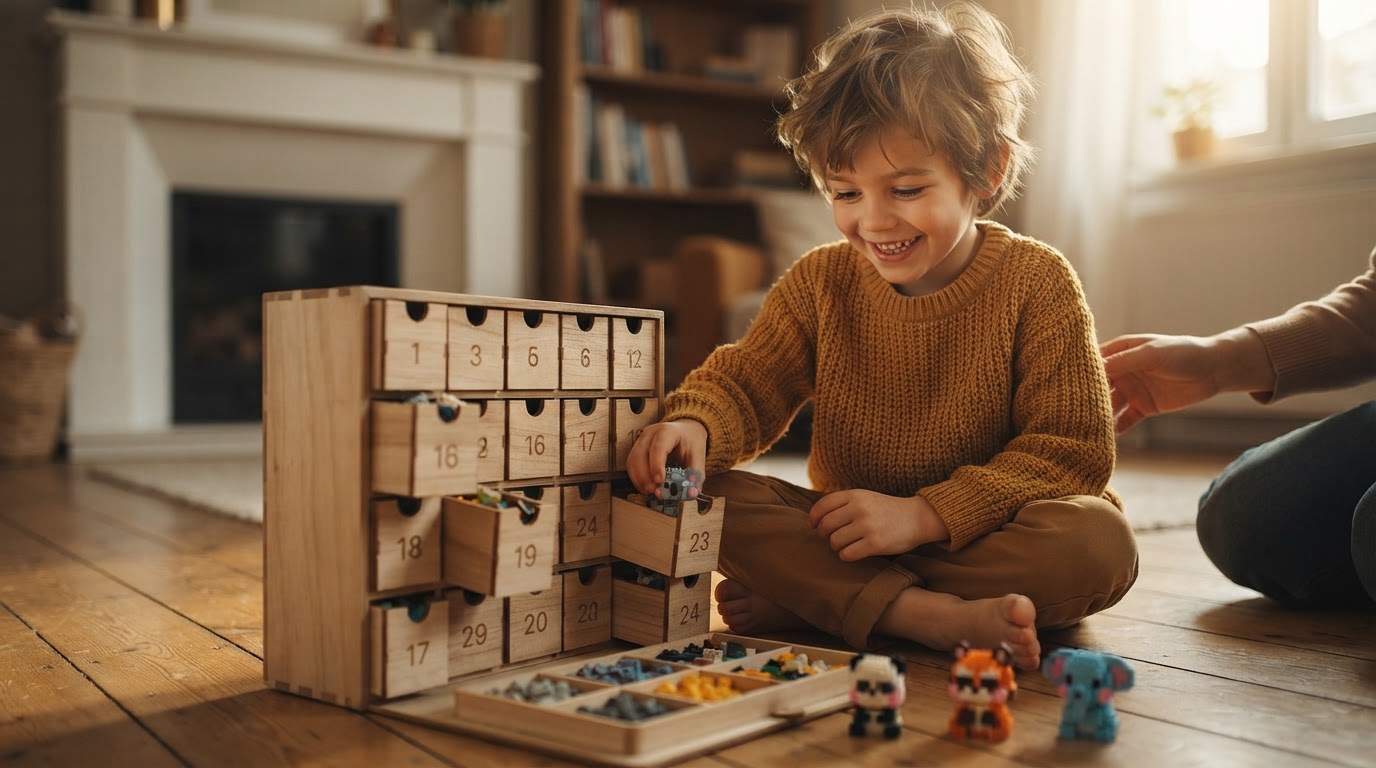
How to fill a DIY Building Blocks Advent Calendar?
 Priya RamanSenior Analyst
October 3, 2026 — Filling a DIY Building Blocks Advent Calendar requires a systematic approach to piece distribution, balancing daily complexity with the final structural integrity of the completed model.
Parents and hobbyists often seek to customize their holiday countdown to align with specific interests or to ensure higher quality components than standard retail options. The process is simplified when viewed through a specific organizational framework that prioritizes build progression over random distribution. Two axes matter here: the physical volume of the bricks and the functional importance of the pieces within the assembly sequence.
Which blocks work best for daily advent calendar fillers?
The decision rule for selecting fillers is to prioritize compatibility and thematic coherence, typically favoring standard 2x4 or 2x2 bricks for foundational days and specialized elements for later dates. A successful DIY Building Blocks Advent Calendar relies on a mix of structural staples and "hero" pieces that give the build its character. Think of it as a matrix of utility versus aesthetic appeal; while basic plates provide the necessary base, unique minifigures or transparent elements maintain high engagement levels throughout the 24-day period.
When sourcing these materials, many collectors look for bulk building block christmas gifts to acquire a high volume of parts at a lower cost-per-unit. Data from consumer search trends indicates that toy advent calendars for boys and girls are increasingly judged by the playability of the individual daily builds. By using a [reusable building block advent calendar](/blog/sustainable-value-building-blocks-advent-calendar) framework, you can ensure that the fillers chosen are durable enough for multi-year use, rather than single-use novelties. The goal is to move beyond the limitations of pre-packaged sets by selecting pieces that allow for open-ended creativity once the holiday season concludes.
How should you organize the daily build sequence?
Once you see it this way, the organization of a Building Blocks Advent Calendar becomes an engineering task where you distribute the heaviest structural components in the first week and the fine-detail finishing pieces in the final three days. This progression ensures that the user has a stable foundation to build upon as the countdown continues. For those moving away from traditional sets, exploring [lego advent calendar alternatives](/blog/selecting-building-blocks-advent-calendar-alternatives) provides a blueprint for how to scale difficulty; start with simple 5-10 piece sub-assemblies and peak with a 20-piece centerpiece on December 24th.
Effective organization also involves a color-coding strategy to prevent frustration. If the final model is a winter village, ensuring each day's pouch contains a logical subset of the palette—such as whites and blues for the landscape—prevents the builder from becoming overwhelmed by a disorganized pile of bricks. A common strategy involves bagging daily sets in small, numbered compostable sachets before placing them in the calendar slots. This method preserves the surprise while maintaining the integrity of the instructions, which should be provided either as a single printed booklet or 24 individual mini-cards to guide the daily assembly process.
Quick answers
Q: How many pieces should be included in each daily slot? A: A typical daily build contains between 15 and 25 individual pieces, which is sufficient to create a recognizable micro-model without overcrowding standard 2-inch advent drawers. Q: What is the most cost-effective way to source filler blocks? A: Purchasing bricks in bulk by weight or specific color lots often reduces the cost to under $0.10 per piece, significantly lower than the per-piece price of licensed retail calendars. Q: Can standard building blocks fit in all advent calendar types? A: Most standard bricks fit easily into calendars with 5cm x 5cm compartments, though larger baseplates may need to be gifted as a "Day 0" foundation or hidden behind the calendar for the final day.Learn more about Building Blocks Advent Calendar at https://buildingblocksadventcalendar.com.