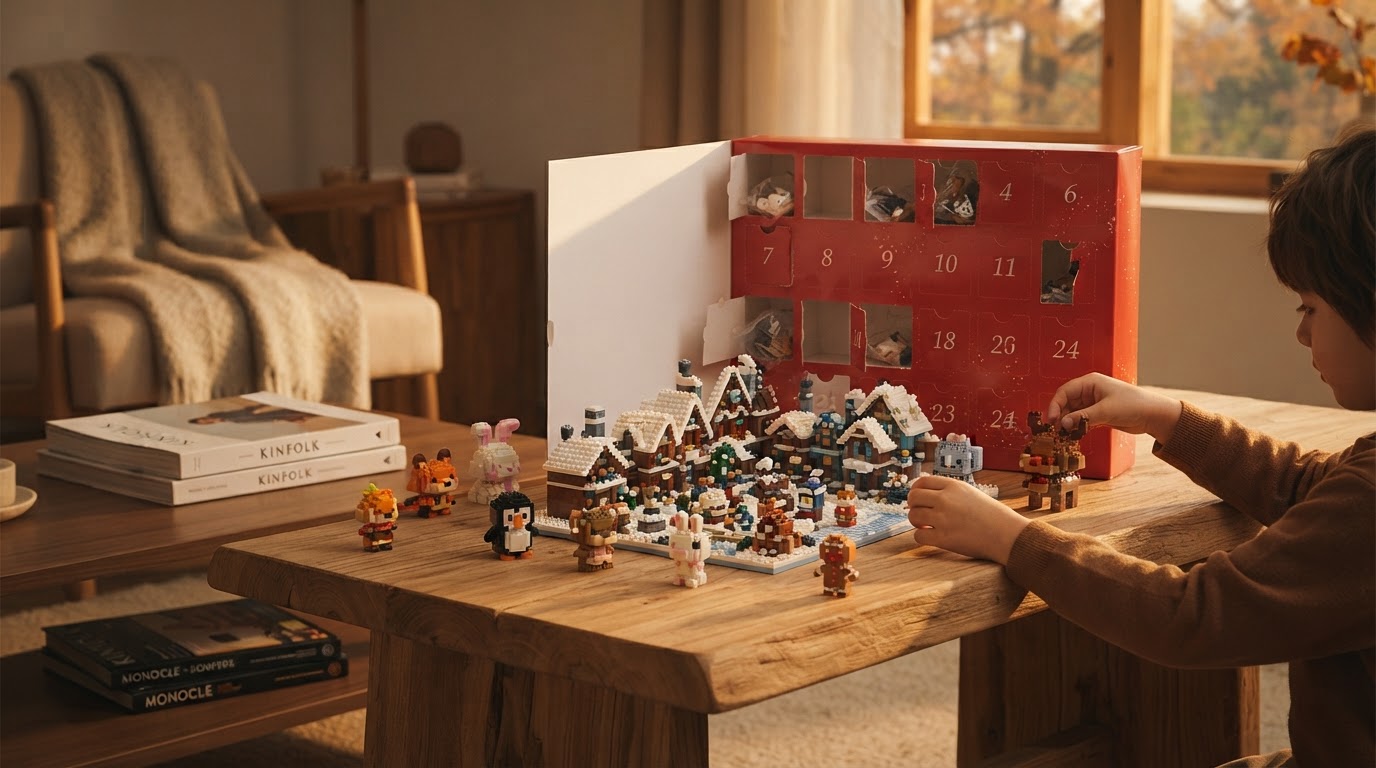
Why choose the Building Blocks Advent Calendar for kids?
 Sam VasquezBuying Guide Lead
October 24, 2026 — The Building Blocks Advent Calendar serves as a durable, skill-building alternative to traditional chocolate countdowns by providing 24 individual daily construction projects that culminate in a complete holiday scene.
Parents and gift-givers often search for these sets to move away from sugar-heavy traditions toward activities that occupy a child's attention for more than a few seconds. Selecting a toy-based calendar involves weighing the complexity of the builds against the child's age and interest level in fine motor tasks. This choice matters because the quality of the plastic and the clarity of the instructions determine whether the December mornings are filled with creative focus or frustration.
How does the Building Blocks Advent Calendar compare to candy?
The Building Blocks Advent Calendar offers a sustained engagement period of 15 to 30 minutes per day, whereas candy calendars typically provide less than a minute of interaction. In my experience reviewing these products, the longevity of the toy is the primary differentiator. While a piece of chocolate is gone instantly, the components of a brick-based set remain in the toy box for years. Reddit community discussions regarding non-candy advent calendars frequently highlight that brick sets provide a tangible sense of progression, as each day's build usually contributes to a larger, cohesive display. If you're on a budget, the initial cost of a brick calendar is higher than a supermarket chocolate tray, but the cost-per-hour of entertainment is significantly lower. Between these two, I'd go with the building blocks every time because it encourages a daily building challenge advent calendar that builds anticipation through activity rather than just consumption.
What age group is best for a brick advent calendar?
A Building Blocks Advent Calendar is most effective for children aged 5 to 12, as this range possesses the manual dexterity required for small-part assembly. Most sets feature standardized micro-builds that consist of 15 to 30 pieces, which is the sweet spot for maintaining interest without becoming overwhelming. For younger children, the small parts represent a choking hazard, so I always recommend strict adherence to the manufacturer's age warnings. Skip this if your child hasn't yet mastered basic interlocking bricks, as the advent versions often use smaller, more delicate connections than standard play sets. The building blocks advent calendar visual experience is designed to be intuitive, but children at the lower end of the age spectrum may still require adult assistance to align the pieces correctly. Here's what I'd actually buy: for a six-year-old, I look for sets with high-contrast colors and clear, one-page instruction leaflets to ensure they can complete the task independently.
Quick answers
Q: Are the bricks compatible with other major brands? A: Yes, the Building Blocks Advent Calendar uses industry-standard dimensions, meaning the pieces will integrate seamlessly with existing collections from brands like LEGO or Mega Construx. This allows the 24 individual builds to be repurposed into larger custom creations after the holiday season ends.
Q: How much space is needed for the completed set? A: The full scene typically requires a flat surface of approximately 12 by 18 inches. Most calendars include a fold-down playmat attached to the box itself, which serves as the designated display area for the christmas building set countdown throughout December.
Q: Does each day include separate instructions? A: Every door in the Building Blocks Advent Calendar features a printed diagram on the inside of the flap showing how to assemble that specific day's toy. This eliminates the need for a bulky manual and ensures the child only sees the instructions for the current day's surprise.
Learn more about Building Blocks Advent Calendar at https://buildingblocksadventcalendar.com.